Cat Health & Safety
‘Risky Business’
Planning a little overnight trip? Fantastic! Everybody needs (and deserves) a bit of time away. If you plan to leave your cat at home, just don’t forget about their health and safety while you’re gone! It can be risky to leave them alone without supervision, even just for 24 hours or a “quick weekend.” From urinary tract obstruction (Tip #96) to getting injured or lost, or even becoming dehydrated after getting trapped in a closet … a lot can go (and has gone) wrong in 24–48 hours with “home alone” cats. Instead, get a pet sitter or someone else you trust to stay in your home, or at least come by each day (ideally twice a day) to feed meals, scoop the boxes, and play with your cat. (It’s important for them to actually SEE your cat at each visit, to really know that nothing’s wrong.) Though this may cost you a few bucks, it’ll help keep your cat much happier and safer while you’re away, and could make your return home much less stressful and expensive, too.
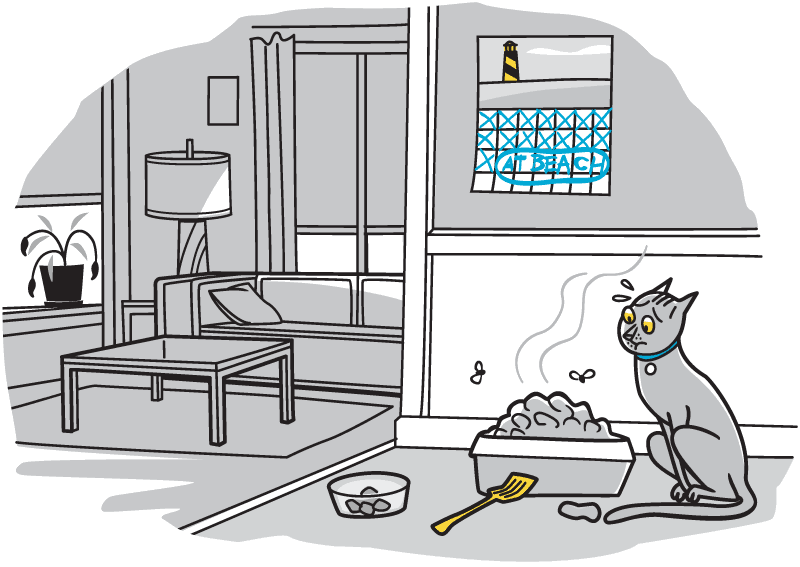
owners had just spent a relaxing anniversary weekend away, but returned home to an unpleasant surprise: Their 3-year-old cat had vomited throughout the house. Their surprise turned to concern when they noticed that he was acting “sluggish” and hadn’t eaten much of the food they had left out. They took him straight to the Animal ER, where the vet noted that his bladder was distended and firm, and told them that Panther’s kidney blood values and potassium were high. Their concern quickly turned to fear, as they learned more about urinary obstruction — the cause of Panther’s vomiting and “sluggishness.” It took two catheters, five days of hospitalization, and more than $3,500 before Panther was stable and could pee on his own again. He now gets wet food twice a day and has a live-in pet sitter whenever his people go on any overnight getaways.
Found this useful?
Found this
useful?


