Cat Health & Safety
Reunited and it feels so good
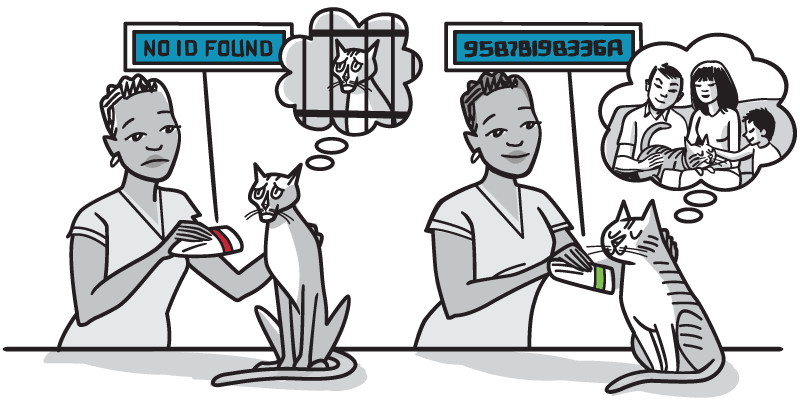
Because they’re easy to see and read, ID tags are the quickest way for someone to identify and return your cat should they ever sneak out or get injured or lost. All cats should wear them. But ID tags aren’t foolproof — they can wear down and fall off. So, your cat should always have two forms of ID. A microchip is an extremely important and reliable backup form of identification for pets — including indoor-only cats. Your vet can “chip” your cat during their spay/neuter procedure, or at any other time. Just be sure to register the chip, keep your contact information up to date, and have your veterinarian scan and check the chip at your cat’s wellness visit each year.
Safety note about ID tags: Consider ID tags that lay flat on your cat’s collar, as dangling tags can get caught between the boards of decks, on fences, and other objects in and around your home and yard, potentially causing panic and strangulation.
family never forgot her, but they certainly didn’t think they’d ever see her again. Their 3-year-old cat had run through an open door when their Colorado house was being renovated. They hung “lost cat” posters and searched their neighborhood and local shelters for months. When she didn’t turn up, they assumed she had been hit by a car or eaten by one of the many coyotes that frequented their neighborhood — the exact reasons she was an indoor cat in the first place. Thankfully their assumptions were wrong. Nearly five years after she went missing, the family received a call from Animal Control in New York City: Willow had been found, alive and well … more than 1,700 miles away!! It was her microchip that helped to reunite this far-from-home feline with her family. While their renovations were completed several years before, it was only after getting Willow back that her family said their house felt like a home again.
Found this useful?
Found this
useful?

