Senior Cat Comfort & Care
I need my beauty rest
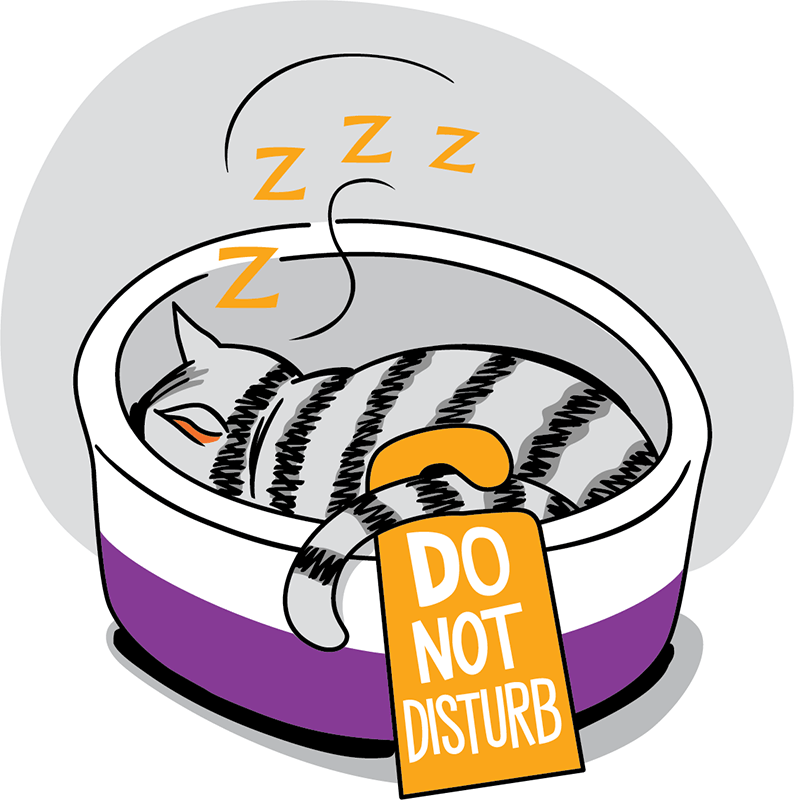
Quality and quantity of sleep are important elements of your cat’s quality of life and tools for you to track their health. This is where it’s helpful to pay attention to your cat’s normal routine and how it changes as they age. They may sleep for longer or shorter periods, be more restless during sleep, or sleep more deeply.
Remember, sleeping more and moving less can also indicate pain (Tip #43). And sudden changes can be triggered by medical issues. So, sleep is an important thing to keep an eye on.
You can get help from activity monitors in collar form or small trackers you add to your cat’s collar. They allow you to monitor your cat’s sleep, among other things, helping you detect abnormalities in their sleep patterns.
Younger cats can sleep around 15 hours a day. Senior cats may sleep closer to 20 hours a day. But just because they can doesn’t mean they should. It could be more about boredom than age. See Chapter 9 for ways to keep your senior active and engaged, both of which can help with sleep quality.
Found this useful?
Found this
useful?


