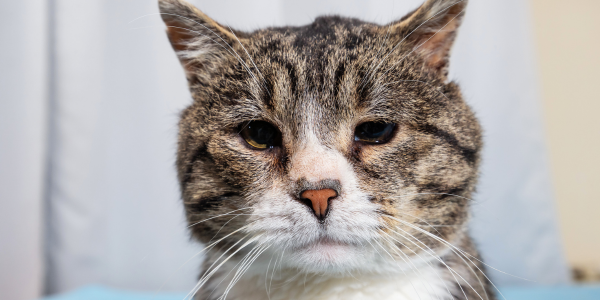
Senior Cat Comfort & Care
Pain
The aging process can take a toll on your furry friend’s body, resulting in some degree of pain or discomfort. Veterinary researchers estimate that 90% of cats over 10 years old have arthritis and chronic discomfort. Nearly 33% of cats over 10 are likely to develop cancer that can be painful. The symptoms of other common senior cat medical issues (chronic vomiting, diarrhea, oral ulcers, etc.) can also cause pain or discomfort.
Detecting pain in our seniors is not always easy. Observe your cat closely and look for subtle signs: excessive or decreased grooming, decreased appetite, vocalization, hiding, changes in posture, behavioral changes, etc. For more on how to assess pain, check out Tip #100.
Make pain management a priority. If the cause of the pain can’t be completely resolved, talk to your vet about ongoing pain support. Remember, if you can see even a little discomfort in your cat, it’s probably worse than it seems and worth treating.
Modifying your cat’s environment can also help reduce discomfort as they move around. You can find more information on environmental changes in Chapter 11.
Found this useful?
Found this
useful?